But first: some context on kimchis significance in South Koreas culinary heritage.
Kimchis legacy in Korean cuisine
Kimchis cultural significance cant be understated.
There are even different types of kimchi based on varieties of a specific veggie at hand.
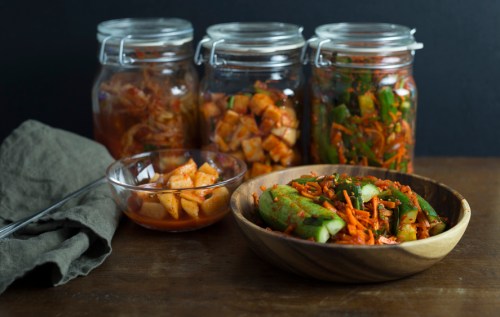
Kimjang is also an important reminder for many Koreans that human communities need to be in harmony with nature.
The Korean table is represented by three [foods]: rice, soup, and kimchi.
Rice, a carbohydrate, is the main ingredient, and salt is essential to help digest the rice.
…
Kimchi is delicious, nutritious, and can be stored for a long time, An adds.
Cut the radish into one-inch cubes.
Salt and let sit if needed (refer to the first tip above).
Cut the apple into one-inch cubes.
Cut the water parsley and chives in one-inch slices.
Add all produce to a large bowl and dye them with fine gochugaru.

Mince the salted shrimp (or use a food processor).
In a separate bowl, mix all kimchi paste ingredients together.
Mix vegetables and kimchi paste; toss and coat well.

…
Store kimchi in an airtight container.
Let ferment at room temperature for 24 hours before storing it in the refrigerator.
…
Got it, you’ve been added to our email list.